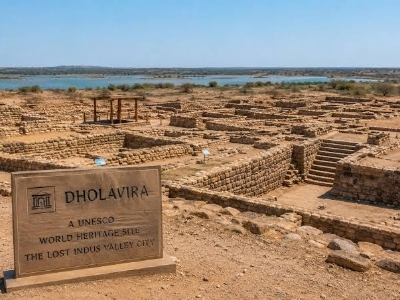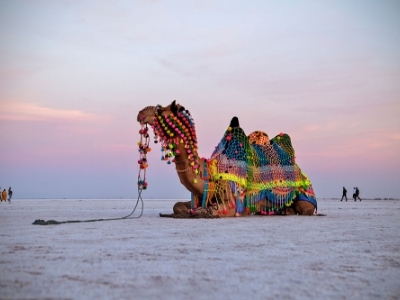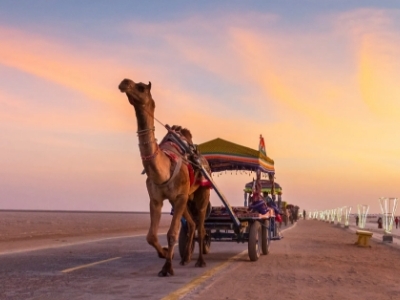


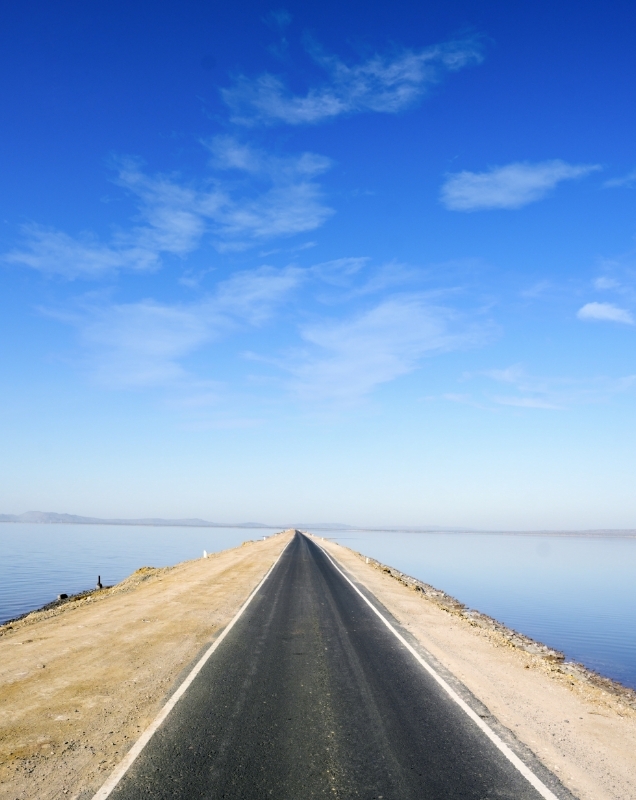
The Dholavira Road to Heaven is a 30 km causeway that runs straight across the Great Rann of Kutch between Khavda and Khadir Bet, the island on which Dholavira stands. White salt flats lie on both sides. It gives a direct route to Dholavira from the Khavda side. The older route from Bhuj runs through Bhachau and Rapar.
Details were last checked on 2 October 2026. Gujarat Tourism calls it the “Road Through Heaven”.
| What it is | A causeway across the Great Rann of Kutch |
| Length | About 30 km |
| Runs between | Khavda and Khadir Bet (Dholavira) |
| Bhuj to Dholavira | About 220 km by this route, according to the Tent City operator |
| Bhuj to Dholavira, older route | 250 km via Bhachau and Rapar |
| Best months | November to February |
| Nearest airport | Bhuj |
| Entry fee for the road | None. It is a public road |
There are two ways to reach Dholavira from Bhuj.
| Route | Distance | Notes |
|---|---|---|
| Bhuj, Khavda, Road to Heaven, Dholavira | About 220 km | The scenic route across the Rann |
| Bhuj, Bhachau, Rapar, Dholavira | 250 km | The older route, listed by Gujarat Tourism |
The first figure is from the official Rann Utsav site and the second from Gujarat Tourism. Use them as a guide and check live navigation on the day.
No official source states this distance, so check live navigation on the day.
From Dhordo the route runs through Khavda and onto the causeway. Plan it as a full-day trip. The Tent City operator suggests it for guests on a three-night stay.
Gujarat Tourism lists one state bus by the older route: it leaves Bhuj at 2 PM and reaches Dholavira at 8:30 PM, and returns at 5 AM the next morning, reaching Bhuj by 11:30 AM. That means a night at Dholavira. For the Road to Heaven itself, you need your own vehicle or a hired car.
November to February. The salt is dry and white, and the days are mild.
From Bhuj or Dhordo it is a long day. Leave by 7 AM.
give the best light on the causeway.
The flats are under water. The drive is dramatic but check road conditions locally first.
For about 30 km the road is a raised strip with the Rann on either side. In the dry months the flats are white with salt. During the monsoon the Rann floods. In winter, flocks of migratory birds feed in the wetlands beside the road.
Stop only where it is safe to pull over, and do not drive off the road onto the flats.
Fill fuel before you start, in Bhuj, and carry water and food.
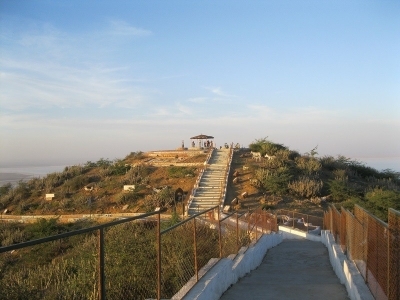
On the Khavda side, Kalo Dungar is the highest point in Kutch at 462 m, with a 400 year old Dattatreya temple at the top.
Book ahead in season.
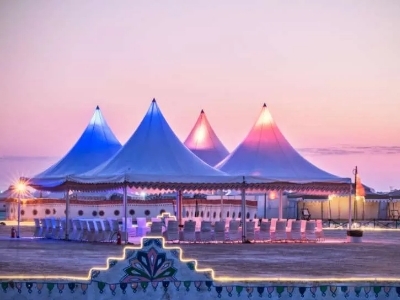
The operator of the Rann Utsav Tent City runs two properties here: a year-round resort with 44 cottages, and a seasonal tent city at Dholavira with 150 tents that operates from November to March.
Staying a night lets you see the archaeological site in the morning and drive the causeway in good light both ways.
A common plan is two nights at Dhordo for the White Rann and one night at Dholavira, driving the Road to Heaven between them. Our Kutch itinerary for 3 days and Rann Utsav itinerary both include it. If you would rather not drive, see the Kutch with Dholavira package.
It is a causeway of about 30 km across the Great Rann of Kutch, between Khavda and Khadir Bet, the island where Dholavira stands. Salt flats or shallow water lie on both sides, depending on the season.
About 30 km, according to both Gujarat Tourism and the official Rann Utsav website.
About 220 km via Khavda and the Road to Heaven, according to the Tent City operator, or 250 km by the older route through Bhachau and Rapar listed by Gujarat Tourism.
There is no fee for the road, which is a public highway. Carry photo ID in this border district. The Dholavira archaeological site has its own entry arrangements.
November to February, when the salt flats are dry and white. Early morning and late afternoon give the best light.
Tell us your dates and group size, and we will send a plan with tickets, transport and stay options. Call us on 1800 233 9008 or send an enquiry.